Fractional CMO vs. marketing agency [Your marketing isn't broken, nobody's driving it]
If you've ever hired a marketing agency, shipped a mountain of "marketing stuff," and watched your growth metrics sit there like a houseplant nobody waters, welcome. You're not alone, and you're not the problem.
Startups are great at generating activity. The trouble starts when execution runs ahead of a real plan, when nobody owns the direction, and when there's no call on what you're saying yes and no to.
Execution can't fix a direction problem. You can't out-post, out-ad, or out-blog a missing decision.
So if your growth plan reads like this (month one: get more leads. Month two: get better leads. Month three: "IDK, redo the website maybe?"), this one's for you. We'll break down the difference between strategy and execution, when a fractional CMO earns their keep, and when a marketing agency is actually the right call.
What is a fractional CMO?
A fractional CMO (fractional chief marketing officer) is a senior marketing executive who works with your company part-time instead of as a full-time CMO.
You bring one in when you need the brains of a CMO (the direction, the executive calls, the hard tradeoffs) without committing to a full-time hire and the salary that rides along with it.
And because a fractional CMO works across a few companies at once, they show up with range. Fresh eyes, tested frameworks, and usually a real track record of sharpening go-to-market strategy (GTM) and making brand positioning actually mean something.
What does a fractional CMO do?
A fractional CMO leads the marketing. They don't run the day-to-day campaigns. The job is strategic leadership: working with the C-suite, the leadership team, and your in-house marketers to point every bit of marketing at the actual business goals.
In practice, that looks like:
Setting the marketing strategy and the GTM strategy (deciding what you say yes and no to)
Clarifying your brand positioning and messaging
Building KPIs and a scorecard tied to results you can measure, not vanity numbers
Helping you decide which channels are worth pursuing (SEO, social, or something else) instead of chasing all of them at once
Feeding marketing insight back into product and service development
Mentoring your team and sharpening how everyone makes decisions
And that's just the tip of the iceberg.
Take Anchor Group. They hired me to help with positioning, messaging, and website copy. That work turned into a full team restructuring and a culture shift. We reorganized marketing around people's actual strengths, redrew the roles and responsibilities, and tightened up the sales process and the customer experience along the way.
What started as brand work became business work. Because brand is business, no jive. A fractional CMO gets hired to move the business, not just the marketing.
Are fractional CMOs actually worth it?
Plenty of founders are skeptical about hiring a fractional CMO, and honestly, they've earned the right to be.
Most have been burned before. They hired an agency or a consultant who promised growth and handed over a stack of deliverables nobody could tie to a single dollar.
Here's a real one. We work with LAK Group, a US-based human capital consultancy, that had several agencies each owning a different slice of marketing, with almost nobody coordinating or checking the work. The bill for that? Hundreds of thousands of dollars in wasted spend.
So we audited every agency, consolidated the marketing and the tech stack into something leaner, and put strategy back at the center where it belongs. Now the company spends its budget with discipline and effectiveness instead of crossing its fingers.
That's the difference a fractional CMO makes. A real one sits on the executive team, installs clear frameworks and KPIs, and steers the marketing toward results you can actually measure.
When the role is set up right, you tend to get:
sharper strategic insight
real alignment between marketing and sales
cleaner decision-making
marketing that actually works
Every one of those only shows up when somebody truly owns the strategy. Which lands us on the real question every founder is circling: who should own it in the first place?
Who should own the marketing strategy?
When marketing goes sideways, it usually doesn't look like a disaster. It looks like a task list. "Run ads." "Post on LinkedIn." "Redo the website." Built on gut feelings and "company X did it, so we should too." No plan, no priorities, no way to know what's actually working.
Here's the skinny. If your marketing feels broken, it's rarely that your team can't execute. It's that nobody owns the decisions that make execution worth a damn: what you prioritize, what you skip, what "good" looks like this quarter, and how you'll measure it.
So the real question isn't "agency or fractional CMO?" It's "who owns the strategy, the priorities, and the scorecard?"
Agencies are built to execute: ship the assets, run the channels, report the outputs. A fractional CMO is there to lead: set direction, make the tradeoffs, manage the vendors, and hold the line long enough for it to work.
Agencies build the plane. Somebody still has to decide where it's flying.
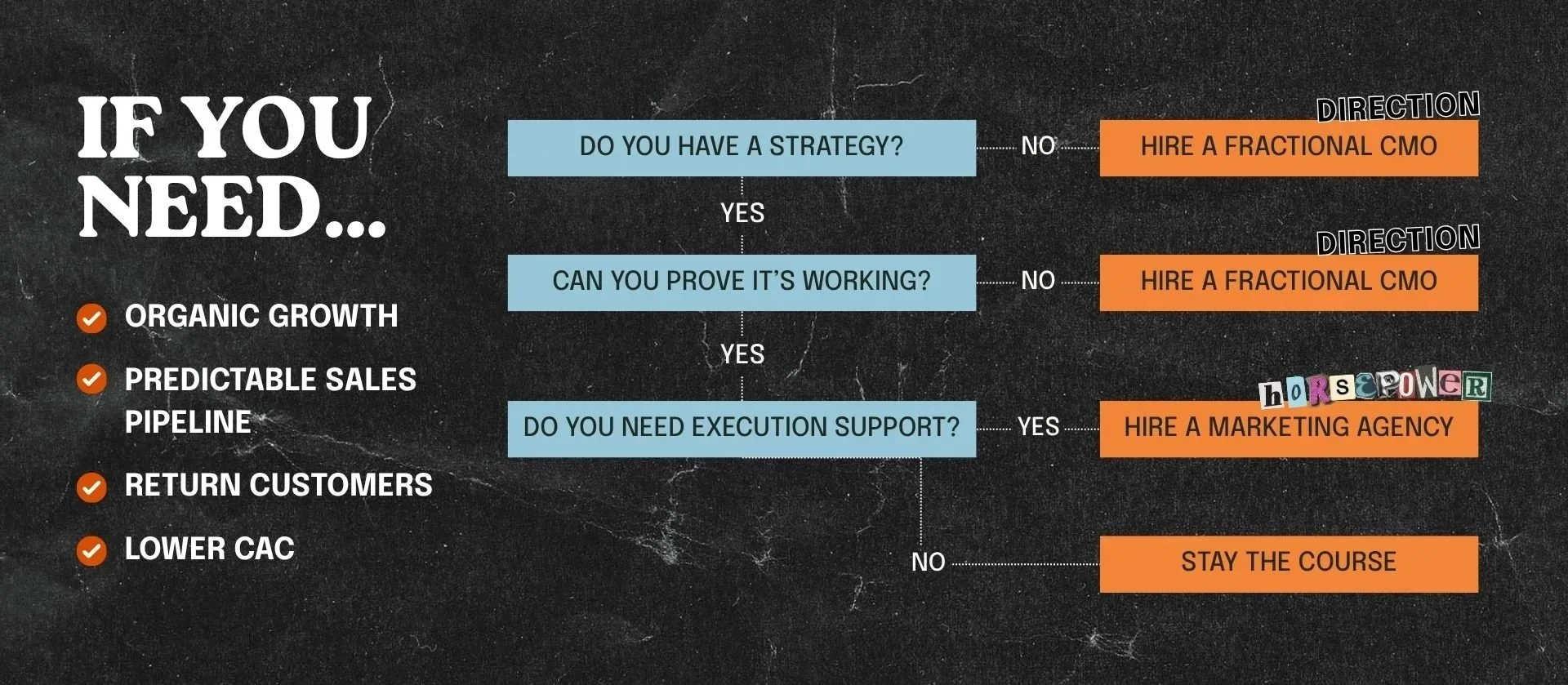
Here's the lowdown:
Strategy is clear, and you need horsepower? Hire the agency.
Strategy is fuzzy, and you need focus? Hire a fractional CMO. Then your agency finally has a real job to do.
Either way, don't make an agency invent your strategy. You'd be outsourcing the one thing you can't: the decisions.
How do you know if your marketing strategy is working?
You might already have a strategy, and growth still isn't coming. Honestly, that's the more common story.
Maybe you're a founder, or a seasoned CEO, who's read the playbooks, studied the market, and set the direction yourself. You might even be right. The problem is, how would you know?
What we usually see: people making pretty good calls with no clean way to tell what's working, and no feel for how long results should actually take.
So weeks pass, the pressure builds, and panic sets in. The strategy starts changing mid-flight, until the whole thing feels less like a plan and more like your company went to see Ozzy (RIP) and got swallowed by the mosh pit.

So if you've got a founder or CEO-led strategy, a team executing it, and still no results, you might not have a strategy problem.
You've got a proof problem.
Your team can rattle off what shipped: blogs, ads, emails, landing pages. But the second someone asks "cool, did any of it move revenue?", the answer goes soft. And when impact is fuzzy, priorities get fuzzy right behind it.
Gartner found that only 52% of senior marketing leaders can prove marketing's value and get credit for what it contributes to the business. Barely half. The rest are guessing.
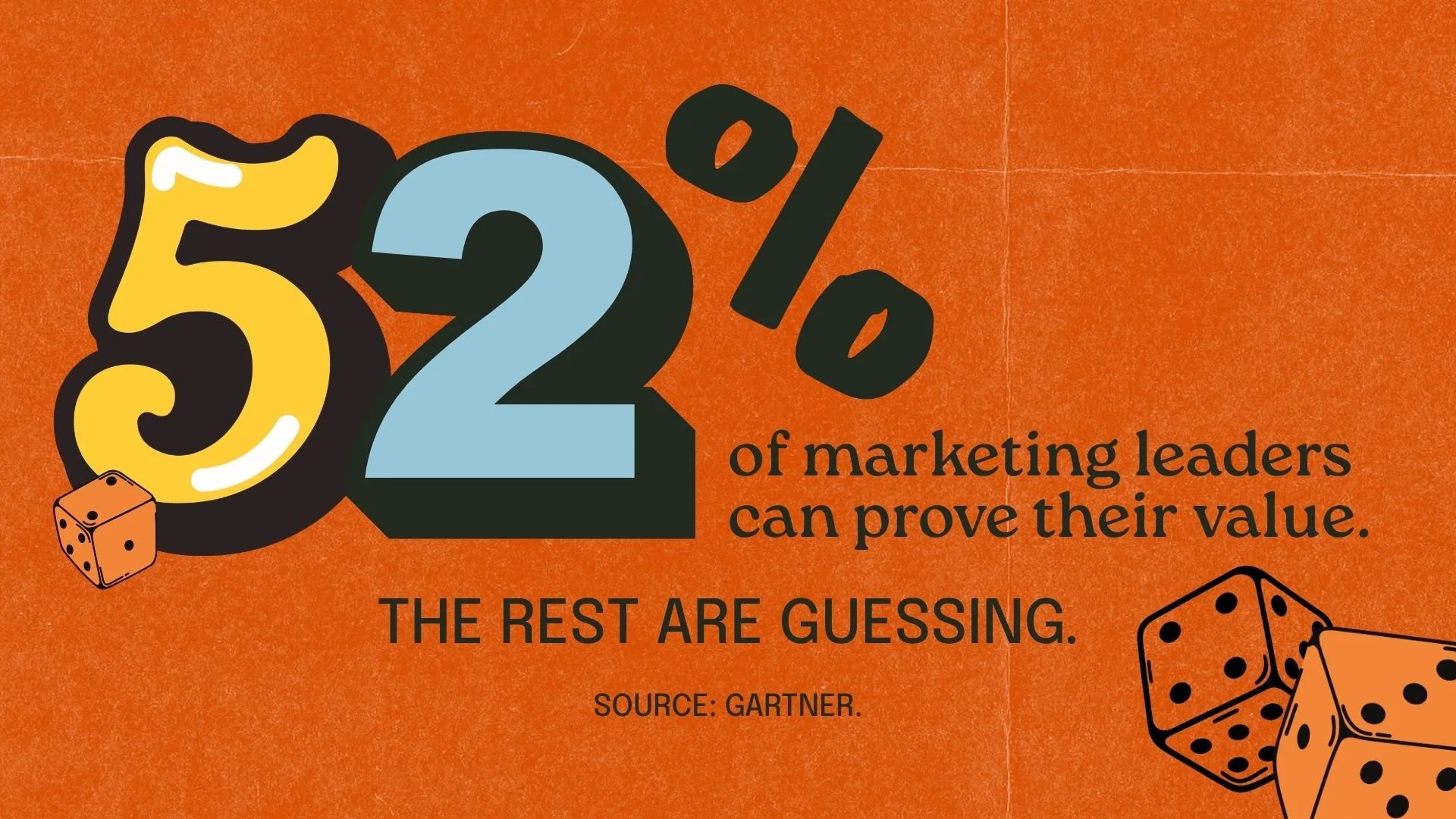
That's where the spiral starts. If you can't prove what's working, you can't prioritize with any confidence. So you start grabbing at the next shiny thing: SEO this month, paid the next, "maybe we need a rebrand" the month after. Not because you're flaky, but because you're trying to find traction in the dark.
This is exactly why "who owns the strategy?" matters. A fractional CMO installs the decision system: a shared scorecard tied to real business outcomes, clear lead-quality definitions agreed on with sales, and a regular rhythm for reviewing what's working. So you can hold your ground long enough for marketing to actually compound.
The 30/60/90 day playbook of a seasoned fractional CMO
A fractional CMO should be able to tell you exactly how they'll earn their keep. Here's mine, broken into three moves over 90 days: diagnose, decide, then build the rhythm that makes the work compound.
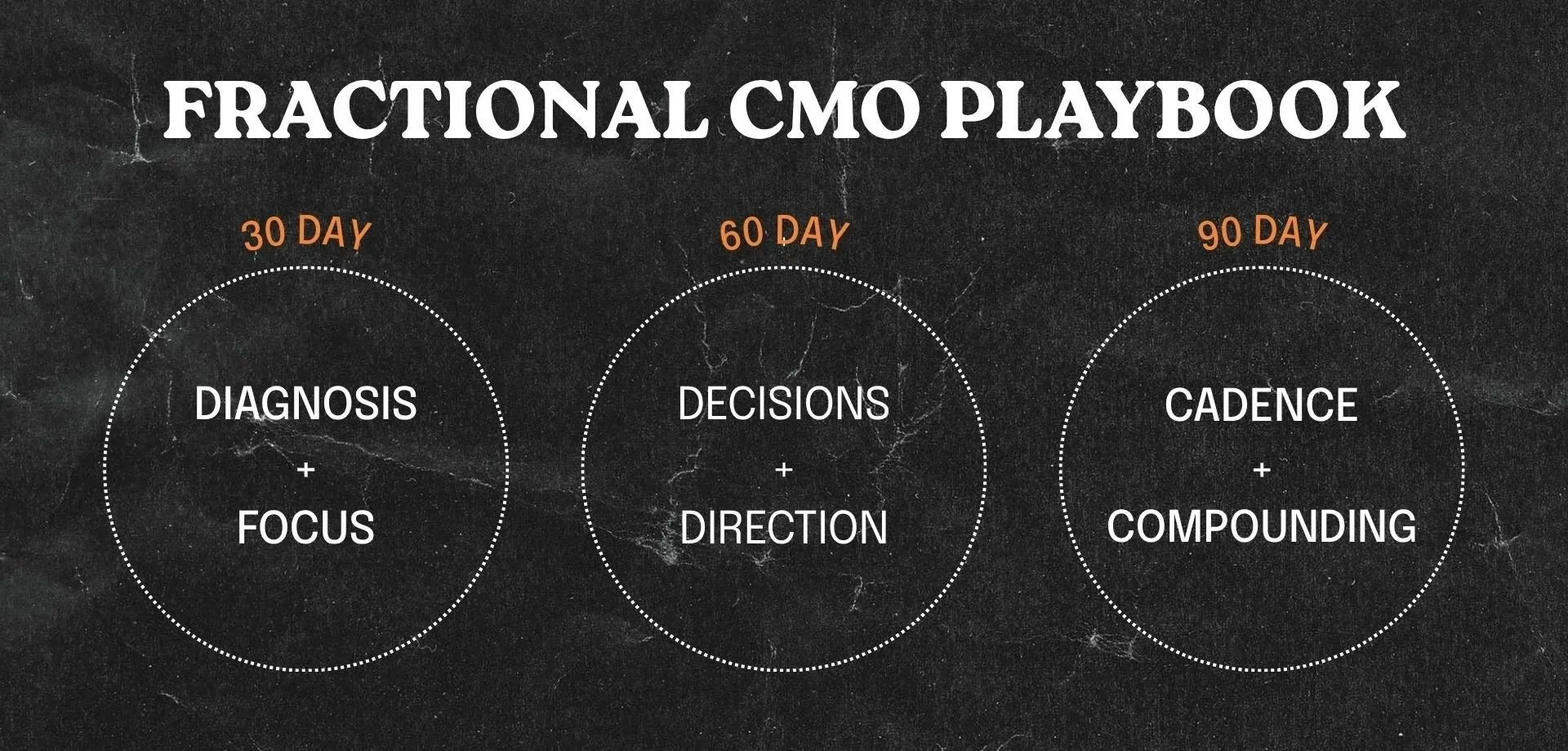
Days 1 to 30: Diagnosis + Focus
Goal: Stop guessing, get everyone to a shared reality, and find the highest-leverage moves.
What happens:
ICP and offer clarity: who we're for, what pain we solve, why we win, what we're selling right now.
Funnel and conversion audit: where leads leak (website, landing pages, sales handoff, follow-up).
Channel reality check: what's actually driving demand versus what's just keeping people busy.
Vendor audit: who's doing what, what it costs, and whether it's tied to an outcome.
Outputs you can expect by Day 30:
A short "what's true, what's not" assessment
A list of quick wins and structural fixes
A clear diagnosis of the real bottleneck (positioning, funnel, channel mix, sales alignment, take your pick)
Days 31 to 60: Decisions + Direction
Goal: Turn the diagnosis into decisions: the priorities, the tradeoffs, and a plan your team and vendors can actually run.
What happens:
Strategy: ICP, positioning, messaging, offer, goals, and what success looks like.
Channel plan: primary channels (commit), secondary (support), and a park list (not now).
Budget allocation: where the money goes, what gets cut, and why.
Stop-doing list: the work quietly draining time without moving pipeline.
Outputs you can expect by Day 60:
A 90-day execution roadmap with owners and timelines
A clean brief for any agency or freelancer work (no more "just make it pop")
A plan that lowers the chaos and raises the consistency
Days 61 to 90: Cadence + Compounding
Goal: Install the operating rhythm so results compound, and you don't fall back into random acts of marketing.
What happens:
Weekly scorecard: a short set of KPIs tied to pipeline, not vanity metrics.
Monthly strategy review: what we learned, what we're changing, what we're doubling down on.
Campaign retros: what worked, what didn't, and why (so you stop repeating mistakes).
Vendor management and performance standards: expectations, quality bar, reporting, and accountability.
Outputs you can expect by Day 90:
A working "marketing machine" with a repeatable rhythm
A team and vendor ecosystem that's aligned and measurable
Clear visibility into what's driving results, and what's just noise
So: execution or direction?
If marketing feels chaotic, it's usually not because you picked the wrong channel or the wrong vendor. It's because nobody owns the tradeoffs: what you're doing, what you're not doing, and how you'll know it worked.
So before you hire anyone, ask one question. Do we need execution, or do we need direction?
If your strategy is clear and you need horsepower, hire the agency. If your strategy is fuzzy and you need focus, measurement, and someone to call the shots, hire a fractional CMO. Once you name what you actually need, the right hire gets obvious.
And if you want both under one roof, that is exactly what we do. Fan Club brings fractional CMO leadership to set the direction, plus an in-house team to ship the work without the usual handoff chaos.
Reach out anytime. We are always happy to jam on all things marketing.