Found, chosen, remembered [The organic growth framework for the AI era]
Search traffic that goes up and to the right is what most companies want to see. Leaders track this metric regularly, along with conversions and revenue. The logic is simple. If a company gets enough traffic, some of it will convert into revenue, even if the brand and design work are underwhelming. It's a way to brute-force growth.
But the rise of AI has changed the SEO (and AEO) equation. AI has made clicks scarce and finding alternative products easy. Brute-forced growth is less effective, while the alignment of brand, design, and growth matters more than ever. Cue the record scratch.
To win, companies now need a brand that makes people choose them over the competition. They need a design that makes the brand memorable. And they need a growth engine that gets them found both by humans and machines.
Done right, the brand-design-growth triad creates a self-reinforcing loop that builds like a Soul Train line, everybody piling in. More and more visitors notice your brand and design, signing up for the offer and spreading the word. This brings in more prospects who fall in love with your brand and reinforce the loop.
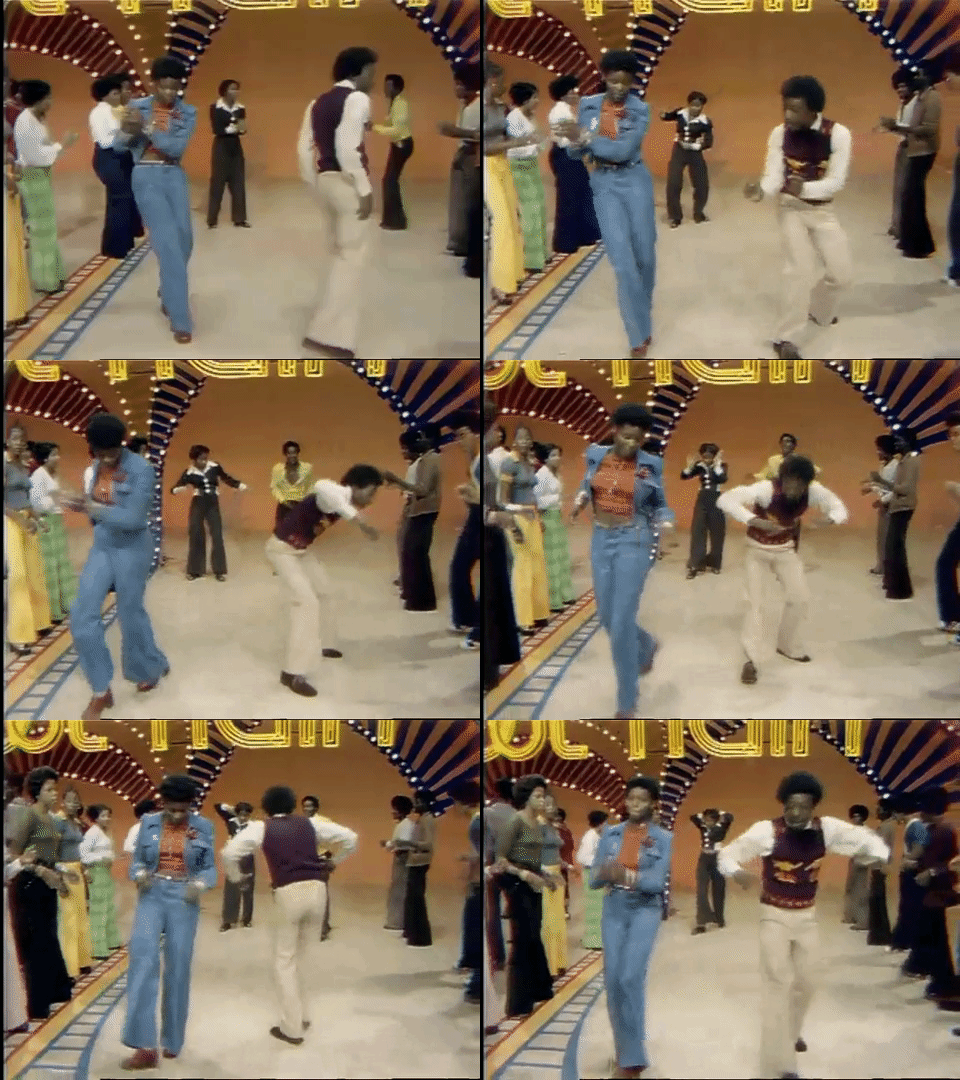
Let's get into it. Here's the lowdown on how to win in the AI era of search.
The dangers of silos in the era of AI
Before the rise of AI, researching a company you want to buy from was done in a piecemeal fashion. You visit a company's site to learn about the product features. Then you hop on to G2 reviews or subreddits, if these exist, to see if you can spot any red flags. And you ask some of your peers if they've heard of the product.
Enter AI. ChatGPT, Claude, and similar AI tools can now do all of this research much faster and better than you ever would. You get an in-depth review of the brand and clear reasoning on whether its product fits your needs, in seconds.
Because AI provides a holistic answer, companies need to invest in a holistic marketing strategy. Siloed marketing efforts that smell like a jive-turkey act no longer cut it.
Your branding can't remain a thought exercise that only half-shows up in your design and growth.
Design needs to be informed by brand and growth strategies. Otherwise, it's just making pretty things for the sake of it, and pretty things don't pay the damn bills.
Your growth efforts need to be grounded in the story that brand and design are telling. And that story needs to be consistent across every channel you use to reach prospects.
None of this is possible if marketing still works in silos. Teams need to coordinate to tell a unified story that both AI and humans will understand and embrace.
Aligning brand, design, and growth
The key step in aligning brand, design, and growth is for marketers to understand the role of each. And how one influences the other to create and communicate a coherent story.
A brand strategy that shows the way forward
Brand guru and the reason Apple looks like Apple, Marty Neumeier, says a brand is "a person's gut feeling about a service, product, or company." In other words, brand is what people say it is, not necessarily what you think it represents.
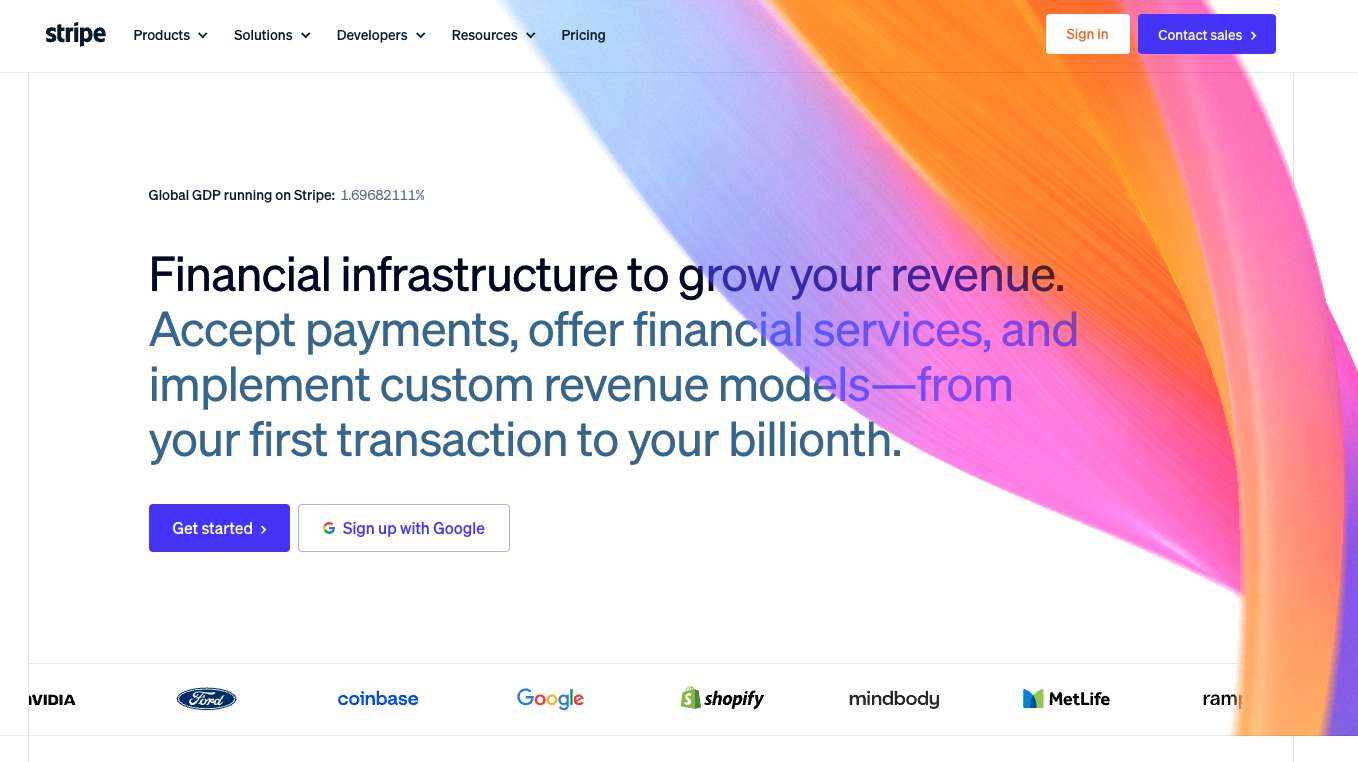
Stripe is the B2B case in point. Ask a developer what Stripe is and you rarely get a description of a payments processor. You get a feeling: this was built by people who respect my time. That feeling came from documentation, API design, and the fact that you could be taking a payment with about seven lines of code, back when the alternative was a sales call and a PDF.
A distinct brand is important on multiple levels because it:
helps companies appear unique
improves how people perceive your service, company, and products
turns a commodity into a product
On top of that, brand strategy influences your business strategy. What your business sells, how it functions, what it promotes, how its product is positioned, what kind of messaging it puts out, and who it serves can all be shaped by brand considerations.
For instance, Stripe's belief that the developer is the customer shaped its go-to-market strategy, because the company grew bottom-up through engineers adopting it rather than through enterprise sales. It shaped staffing, because documentation is run as a product with writers and designers on it, not as a task someone picks up between releases. And a stated mission of increasing the GDP of the internet is why a payments company also incorporates startups through Atlas and runs a book publisher in Stripe Press. Those are brand decisions that turned into business lines.
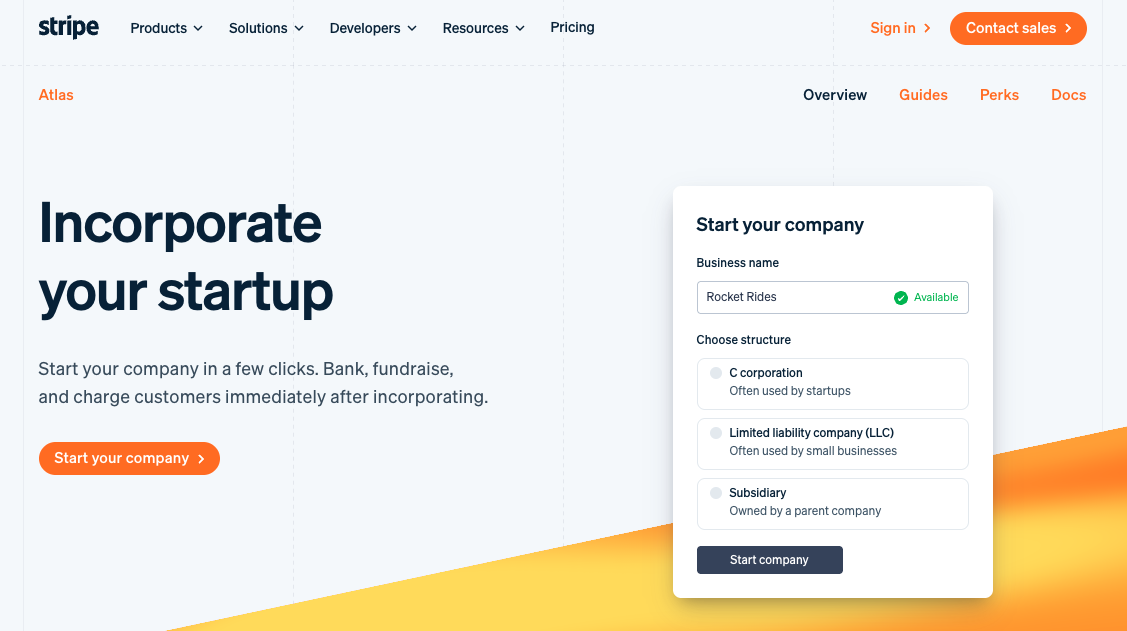
Brand strategy shows the way forward. But it requires teams to act on it and make it real through design and growth efforts.
A design effort that activates the brand
A brand shapes how the company looks, feels, sounds, and smells. But design is how those ideas materialize.
Design grounded in brand means that the choice of imagery, graphics, colors, typography, photography, textures, CTA buttons, brochures, and other elements is intentional. It's not arts and crafts, but a strategic orchestration of these elements to instantly capture attention, create recognition, and evoke a specific emotional response.
Take the language learning app Duolingo as an example. Its custom typeface, Feather Bold, was inspired by the owl itself. The rounded, angled letterforms echo the shapes Duo is built from, and the lowercase g carries a flick that mimics the bird's eyebrow.
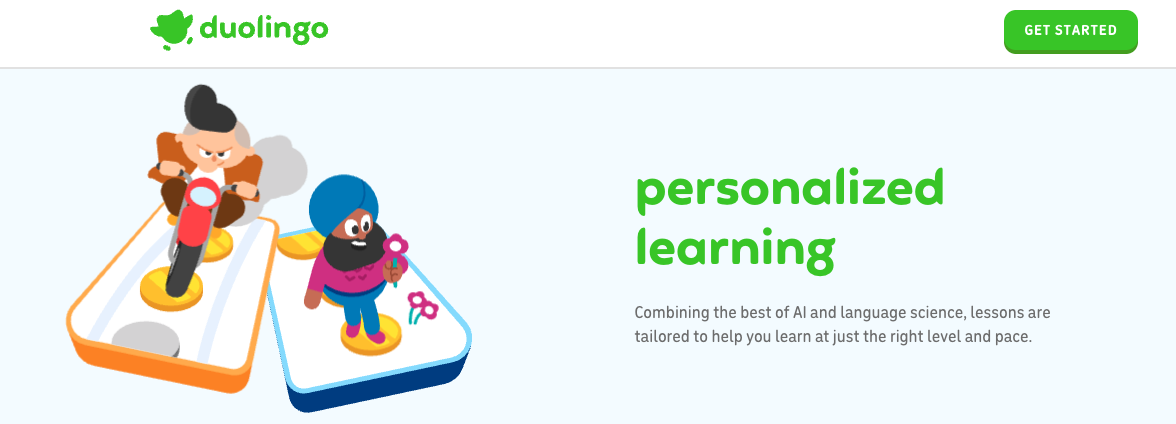
The brand character was literally turned into an alphabet, and everything around it follows the same logic: a loud green lifted straight from the mascot, thick borders, buttons that depress when you press them, confetti when you finish. The interface behaves like a toy, and that is the point.
The emotion Duolingo is engineering is permission to enjoy yourself and be bad at something, because the fear of looking stupid is the main reason adults quit learning a new language. Remove that fear and you get a daily habit. That daily habit becomes a streak, the streak becomes a subscription, and the users with the longest streaks churn the least. Those design choices are the first link in the revenue model.
Design decisions, on your site and across every other channel, are what make your brand memorable. So that the next time visitors need a solution you offer, whether it's a language learning app or a payment processor, they will think of your brand and happily come to your site to give you that sweet cheddar.
And if the product truly solves their problem, those visitors-turned-customers will also turn into your fan club. They will sing your praises like a crowd calling for an encore, because of the emotions you awoke in them and the problems you solved.
A growth strategy that tells a consistent story
Launching an SEO/AEO growth program as the final step of the process is much easier now that you know what your brand stands for and how it wants to be perceived.
Your team can align on a number of strategic and tactical considerations. These include positioning, messaging, ICP, voice and tone, content strategy, KPIs, and other elements needed to communicate a coherent story across organic and paid growth efforts. And these assets can also inform the choice of tactics and distribution channels that you pursue, keeping your story consistent everywhere.
Canva is a case in point. The brand believes that design shouldn't be gated, expensive, or complicated. This belief turned into a product and design decision its competitors at the time were unwilling to make, which is that the interface opens with finished templates users can choose instead of a blank canvas and a toolbar.
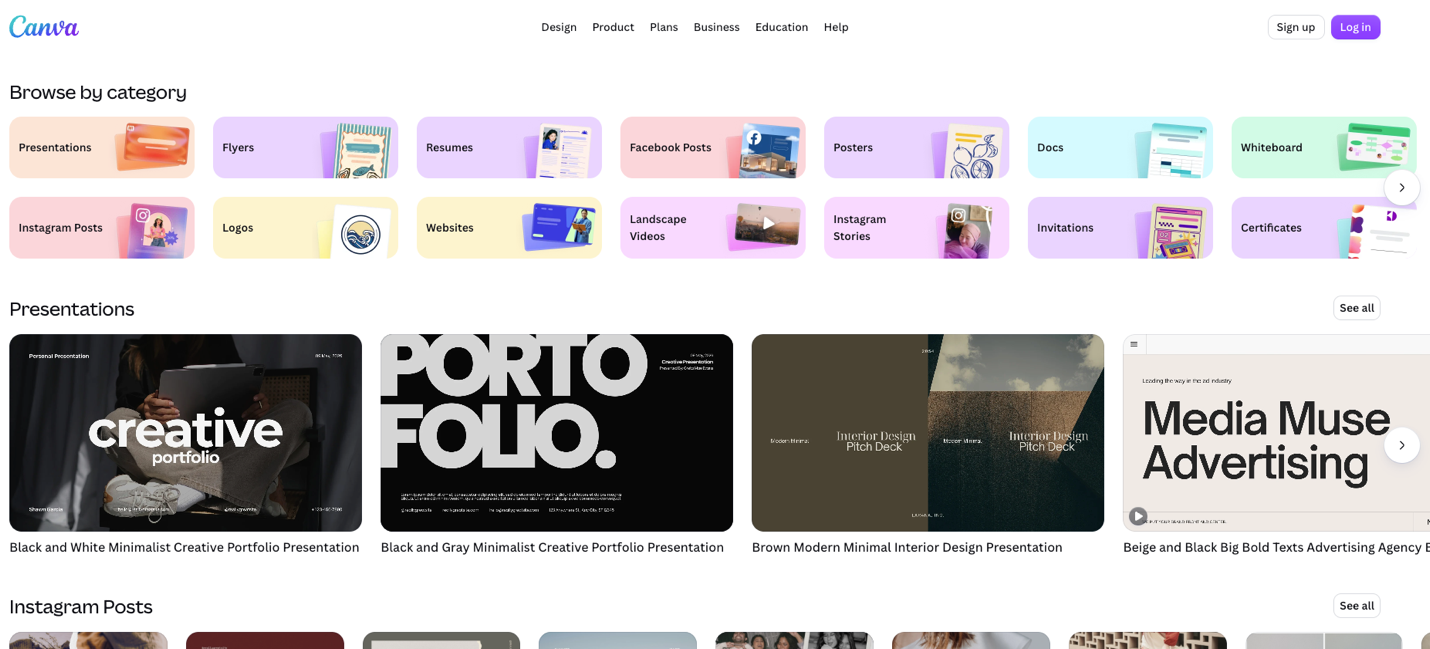
Canva offers a vast library of design templates
And if the product is a library of templates, the growth strategy is writing itself: a series of pages containing specific design templates indexed by search engines. So that when users look for things like presentation templates or Instagram story templates, they land on one of Canva's many pages and start editing it there. Customer acquisition and activation happen in the same moment.
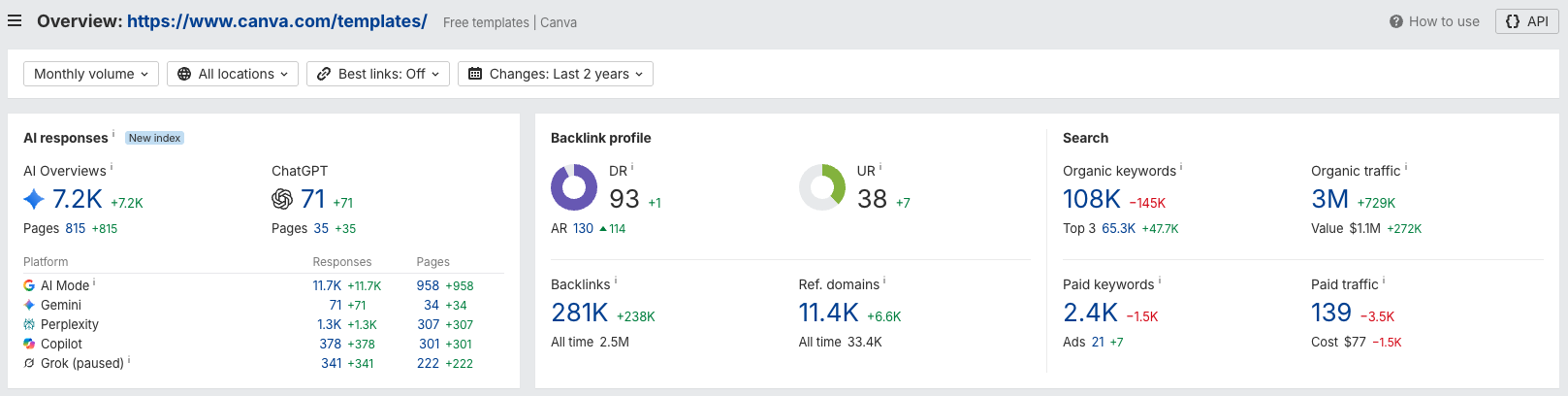
Canva's template section contains 2.5k pages and brings millions of visits each year
The organic search footprint these efforts produced led to millions of visits a month. But Canva didn't get there just because it had a talented organic growth team. It got there because its brand belief about who design is for has shaped product design, and that decision turned into a hugely effective SEO growth play.
Becoming an unstoppable brand
You need a convincing brand, enticing design, and an effective growth engine to drive revenue in the new era of AI-driven search.
Without a brand, visitors don't know your story and what to think of you. Without a design, you become easily forgettable. And without qualified traffic from AI and search engines, you have no prospects to convert in the first place.
But if you execute all three components well, you'll be stone-cold unstoppable.
Fan Club Brands uses the "found, chosen, remembered" framework as the centerpiece of its marketing strategies. If you want to explore how to apply this framework for your company, let’s connect and build something worth starting a fan club over.